Release tension. Restore movement. Rehydrate the fascia. Regulate the Vagus Nerve
Myofascial Release, also known as MFR, is a gentle, hands-on treatment focusing on the fascia. The three-dimensional network of connective tissue that surrounds and supports the muscles, bones, and organs throughout the body. (It is a web-like connective tissue)
The fascial system includes three main layers: superficial fascia beneath the skin, deep fascia surrounding the muscles and bones, and visceral fascia supporting the internal organs.
Healthy fascia is flexible, well hydrated, and able to move freely. Injury, trauma, poor posture, prolonged tension, or repetitive movement may affect the way the fascia moves. Contributing to tightness, stiffness, reduced hydration, restricted mobility, and discomfort.
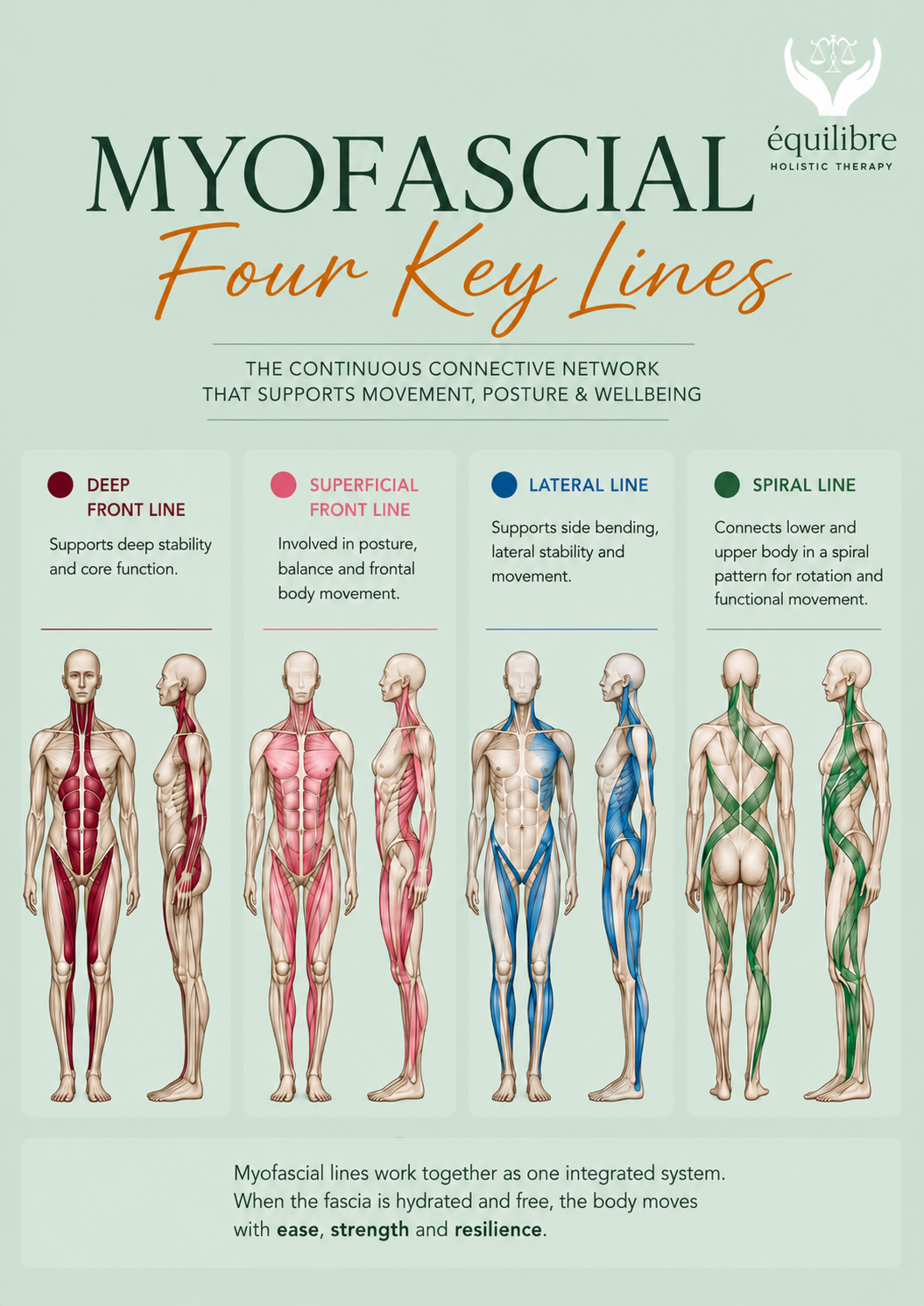
Myofascial Release (MFR) uses slow, sustained pressure and gentle stretching techniques to encourage the fascia to soften, lengthen, move more freely, and rehydrate. Also helping the nervous system to regulate. Techniques used will include grounding, cross-hand stretching, skin rolling, and sacral release.
Trauma and prolonged stress can affect the body’s tissues, increasing tension and altering how the nervous system responds to pain and stress. Myofascial release uses gentle, sustained pressure to ease fascial restrictions, improve tissue movement and circulation, and support lymphatic flow, mobility, and the body’s natural recovery processes.

By stimulating sensory receptors within the tissues, treatment may also help calm pain signals, reduce muscular tension, and improve communication between the body and nervous system. Its holistic, whole-body approach supports relaxation and parasympathetic activity, which may encourage vagus nerve regulation and help the body move away from a prolonged fight-or-flight response.
Benefits of Myofascial Release
Treatment may help to:
- Ease fascial and muscular tension.
- Reduce restrictions and stiffness.
- Improve flexibility and mobility.
- Support more comfortable movement.
- Encourage circulation and natural fluid movement.
- Support posture and body awareness.
- Promote relaxation and nervous-system regulation.
- Ease some forms of persistent pain and discomfort.
- Help the body feel lighter and more balanced.
- Reduce feelings of physical and emotional tension.
What Happens During Treatment?
Unlike traditional massage, Myofascial Release is performed without oils or lotions. This allows the therapist to maintain contact with the skin and feel areas of tension or fascial restriction more clearly.
The treatment is slow, gentle, and adapted to your individual needs. Pressure and techniques will be adjusted throughout the session to help you feel comfortable and supported.
Myofascial Release is a complementary therapy and is not a replacement for medical advice or treatment.